

Here's the rule that will save you more strokes than any swing tip: your worst putt is almost always better than your worst chip. A chunked chip moves three feet. A bladed one screams over the green into the bunker. A bad putt from the same spot? It's eight feet short. That's the whole case for the Texas Wedge — and most amateurs still leave it in the bag out of pride.

Signature Design · The Wild Side FATTY
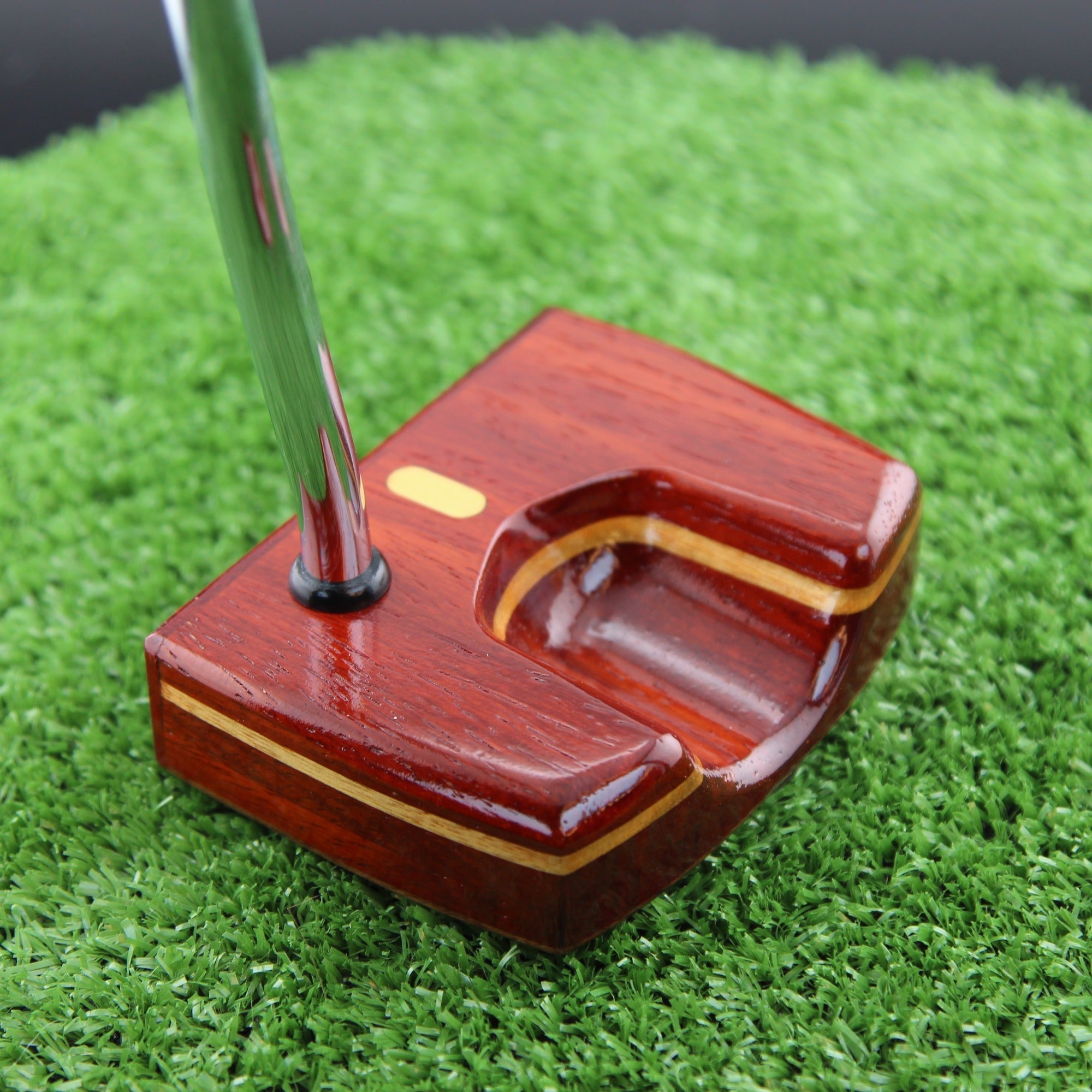
Wild Side FATTY — Zero-Torque Canarywood Mallet
$310 — solid Canarywood in a big, steady mallet
CNC-machined to exact tolerances, hand-finished in the shop — and ready for your custom engraving on the top and sole (+$40 at checkout).
Design Yours → Add to CartWhy It's Called the Texas Wedge
The name comes from the hard, windswept courses of Texas, where firm, tight turf around greens made delicate chips risky — so golfers like Ben Hogan simply putted from off the green. The "wedge" is a joke; the strategy is dead serious. Tour players use it constantly — TV just rarely shows it.
The Green-Light Checklist
Putt from off the green when all of these are true:
Firm, short grass between you and the green. Tight fringe or fairway cut — the ball must be able to roll, not plow. The lusher and softer the grass, the shorter your green-light distance.
No trouble in the path. No bunker lip, sprinkler head, thick collar, or soggy low spot. Any of those, take the wedge.
A tight or bare lie. This is the putter's superpower — the exact lie that makes golfers blade chips is a non-event with a flat face. When the lie scares you, that's a putting lie.
Reasonable distance. Inside about 10 paces off the green, putting is nearly automatic. Farther out works too on firm turf — just weight the fringe correctly.
How to Play It
Read it in two parts: the fringe first, then the green. The ball loses speed fast in even short fringe, so the practical math is to treat every pace of fringe as roughly two to three paces of green, more if it's soft or into the grain. Play the ball middle of your stance, make your normal stroke — just longer — and commit to getting the ball to the hole. The most common Texas Wedge miss is short, not offline.
Why Your Putter's Design Matters More Out Here
This is the part nobody covers: off the green, the stroke is longer and the strike matters more — and that's where putter design shows up. A high-MOI head keeps a slightly off-center strike (easy to do from a fringe lie) rolling on line and up to speed. A heavier head powers the ball through the fringe with tempo instead of a jab. And a face that grips — ours are laser engraved to a consistent depth to start the ball rolling sooner — gets the ball out of its vulnerable skid phase before it crosses the messiest grass it'll see all putt.
Frankly, this shot is where a big stable mallet like our FATTY earns its size: the same head that steadies a 4-footer turns a scary 60-foot fringe putt into a lag you trust.
From the Shop
Pick Your Putter — Every One Can Be Engraved


Add custom engraving to any putter for $40 — just select the option on the product page.
Texas Wedge FAQ
When should you putt instead of chip?
Whenever the ground between you and the green is firm, short, and free of obstacles — especially from tight lies inside about 10 paces of the green. Favor putting over chipping, and chipping over pitching, when both are available.
Why do pros use the Texas Wedge?
Risk control. Time in the air is where big mistakes live; keeping the ball on the ground shrinks the worst-case outcome dramatically.
How do I judge speed through the fringe?
Read the fringe as its own putt: expect each pace of fringe to cost roughly two to three paces of green speed, and adjust for softness and grain. When in doubt, hit it firmer — short is the common miss.
The Bottom Line
The Texas Wedge isn't a trick shot — it's the highest-percentage play disguised as a humble one. Check the path, weight the fringe, trust the flat stick. Your scorecard doesn't award style points; it counts strokes you didn't waste.
Make Your Mark on the Green
Every TimberTouch putter is designed in CAD, CNC-machined to exact tolerances, and hand-finished. Pick yours and we'll engrave your story into it.
Shop All Putters →First Look at New One-of-a-Kind Builds
Many of our putters are one of a kind — when they're gone, they're gone. Join the list and see new builds and engraving ideas before anyone else.
Share:
Yellowheart Putters: Golf's Brightest Natural Wood, No Dye Required
Purpleheart Putters: The Only Naturally Purple Wood in Golf