

How the first wood golf clubs were made is a question we think about every time we pull a rough blank off the CNC. The old Scottish clubmakers were solving the same problem we solve today — put the right amount of wood in the right places and make it survive impact — but they solved it with saws, spokeshaves, glue pots, and animal horn. As a shop that builds wood putters for a living, we want to walk through their process the way one maker reads another's work, because the ingenuity in those old benches is easy to miss.

Signature Design · The Cumberland
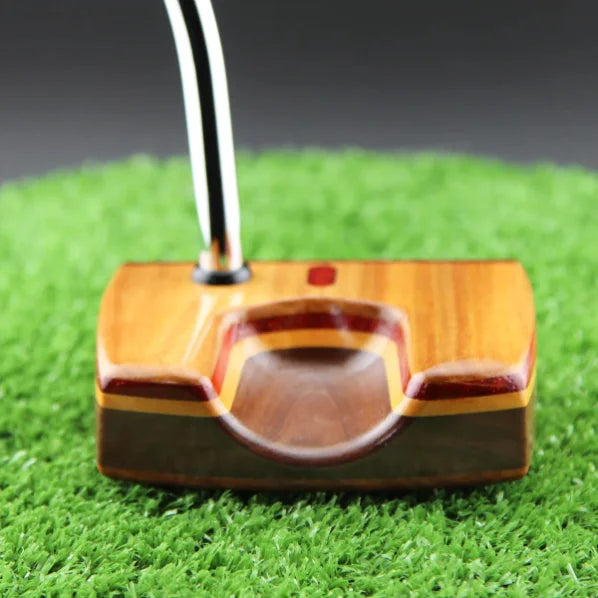
Cumberland Woodrich Regal — Rosewood
$299 — Rosewood, Padauk and Walnut — old-world warmth, modern tolerances
CNC-machined to exact tolerances, hand-finished in the shop — and ready for your custom engraving on the top and sole (+$40 at checkout).
Design Yours → Add to CartChoosing the Wood: Why Beech Heads and Hickory Shafts
The old makers had no exotic wood importers, so they worked with what performed. Heads were shaped from beech and dense fruitwoods like apple and pear — tight-grained hardwoods tough enough to strike a ball thousands of times (Source: hickoryclubs.eu). Shafts were ash at first, then increasingly hickory; by 1826 the St Andrews clubmaker Robert Forgan was importing American hickory specifically for shafts because nothing else matched its combination of strength and flex (Source: Golflink). Wood selection was the first act of engineering, done entirely by eye and experience: a maker read grain direction, checked for run-out, and rejected any blank that would split under load. We do exactly the same thing today before a board ever meets a machine — and just like them, we reject boards that a spec sheet would call fine.
Shaping the Head by Hand
With no routers or mills, the head of a long-nose club was sawn to rough profile, then refined with spokeshaves, rasps, and files until it matched the maker's pattern. The best makers — Hugh Philp of St Andrews chief among them — worked to patterns so consistent that their clubs are recognizable at a glance, which is remarkable when every curve was cut freehand (Source: St Andrews Golf Co.). The face was smooth, the sole was gently radiused, and the whole head was long, shallow, and slender.
What impresses us most is repeatability. Our tolerances come from CAD and a CNC spindle; theirs came from a trained hand and a pattern block. Philp got closer to machine consistency than a hand ever should.
The Scared Joint: Attaching a Shaft Without Hardware
The shaft wasn't socketed into the head like a modern club. Instead, makers used a splice — the “scared” (scarf) joint — where the shaft and the head's neck were both cut to long, matching diagonal tapers, glued, and then bound tightly with waxed linen whipping (Source: Appraisily). Done well, the joint was strong, slightly flexible, and nearly invisible under the whipping. It's a furniture maker's solution to a golf problem, and it worked for two centuries.
Horn, Lead, and Bone: The First Performance Upgrades
Two additions turned a carved stick into a tuned instrument. First, makers inlaid a strip of ram's horn along the leading edge of the sole, protecting the wood from the turf and from topped shots (Source: Appraisily). Second, they poured molten lead into a cavity in the back of the head to bring it up to swing weight and move mass behind the strike (Source: Golflink). When the harder gutta-percha ball arrived in 1848 and started splitting the delicate faces, makers responded with inserts of leather, horn, or bone set into the striking face itself.
Read that list again: sole protection, back weighting, face inserts. Every one of those is sold today as modern putter technology. The old makers invented all three at a wooden bench, and when we position dense wenge at the perimeter of a head and a contrasting face wood on the strike, we're running their playbook with better math.
Grips and Finish: Sheepskin and Boiled Oil
Grips were strips of soft sheepskin or leather wound over a wool underlisting and tacked in place (Source: hickoryclubs.eu). The finish was typically multiple hand-rubbed coats of oil and varnish that hardened the surface and brought up the grain's figure. Finishing is the step where the old craft and ours are similar. We use modern engineered finishes, but apply them by hand.
What Changed — and What Didn't
Around 1910, factories took over from the local professional's bench and mass production ended the handmade era. What changed since is precision: we design in high-level CAD, machine to exact tolerances, and can predict a head's balance before the first chip flies. What didn't change is everything before and after the machining — reading the board, choosing the grain, and the hand-finishing at the end. A CNC machine doesn't make the craft obsolete; it makes the craftsman's decisions repeatable.
If you want to see where two hundred years of this craft ended up, the Woodrich Regal collection is the clearest example — a mid-mallet the old makers would recognize as wood and grain, engineered in ways they never could have drawn by hand.
Frequently Asked Questions
What wood were the first golf clubs made of?
Early club heads were made from beech and dense fruitwoods such as apple and pear, while shafts were ash and later hickory imported from America. These woods were chosen for toughness, tight grain, and the right flex.
How were wooden club heads attached to the shaft?
With a spliced “scared” joint: the shaft and neck were cut to long matching tapers, glued, and bound with waxed linen whipping. Socketed hosels came later, in the late 1800s.
Why did old wooden clubs have horn on the sole?
A strip of ram's horn inlaid along the leading edge protected the wooden sole from wear and impact damage — an early, elegant durability fix that let a delicate head survive years of play.
Did early clubmakers weight their clubs?
Yes. Makers poured molten lead into the back of the head to tune swing weight and put mass behind the ball — the ancestor of every modern weighting system, including the multi-density wood engineering in a modern wood putter.
Are any clubs still made of wood today?
Yes — wood putters are alive and conforming under the Rules of Golf. Modern builds pair the traditional material with CAD design and CNC machining, then finish by hand the same way the old makers did.
From the Shop
Pick Your Putter — Every One Can Be Engraved


Add custom engraving to any putter for $40 — just select the option on the product page.
The Bottom Line
The first wood golf clubs were built with astonishing ingenuity: engineered wood selection, structural joinery, protective inlays, and tuned weighting, all without a single power tool. That bench tradition didn't die — it picked up better instruments. If you'd like to putt with the modern chapter of it, we build every head with the same respect for the board the old masters had, plus tolerances they couldn't have measured.
Make Your Mark on the Green
Two hundred years on, wood is still on the green. Every TimberTouch putter is designed in CAD, CNC-machined to exact tolerances, and hand-finished. Explore the collection and we'll engrave your story into it.
Shop All Putters →First Look at New One-of-a-Kind Builds
Many of our putters are one of a kind — when they're gone, they're gone. Join the list and see new builds and engraving ideas before anyone else.
Share:
Putting Grip Styles: Conventional, Claw, Left-Hand Low and When to Use Each
Dew Sweepers: Why Wiping Dew Off Your Putting Line Costs You Two Strokes