

You're first off the tee, the green sparkles with morning dew, and your ball sits eight feet from the cup with a wet, silver line between them. Every instinct says to towel it dry, or drag your putter head along the line to clear a path. Don't. Wiping dew off your putting line is a penalty under the Rules of Golf — two strokes in stroke play, loss of hole in match play — and it has been for generations. Here's why the rule exists, where the term "dew sweepers" comes from, and how to actually putt on a wet morning green.

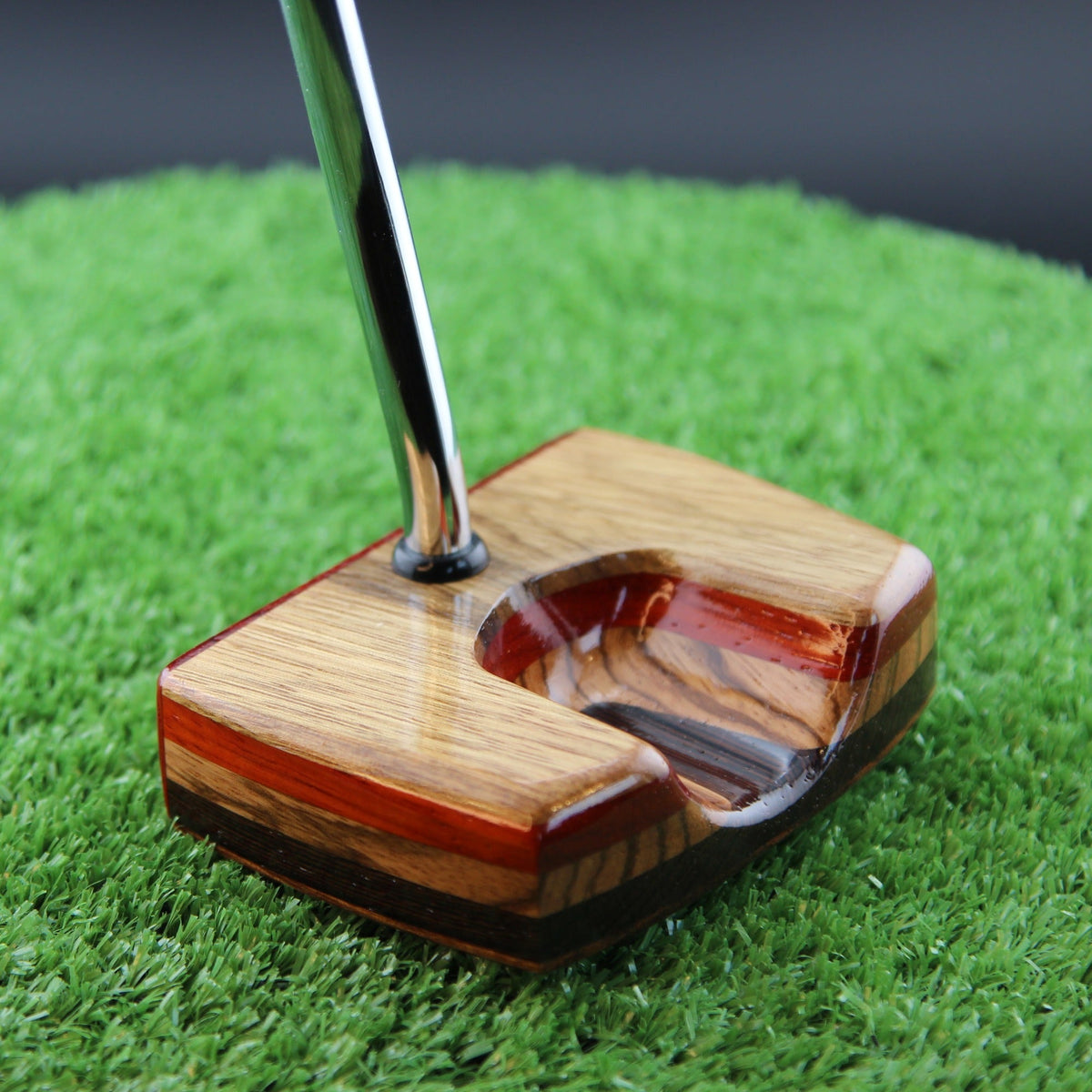
Signature Design · The Espresso
Leopardwood & Wenge Zero Torque Woodrich Regal
$315 — dark roast woods for early tee times
CNC-machined to exact tolerances, hand-finished in our shop — and ready for your custom engraving on the top and sole (+$40 at checkout).
Design Yours → Add to CartThe rule: dew is not yours to remove
Under the pre-2019 Rules of Golf, this lived in the famous Rule 13-2: a player must not improve the line of play by "removing dew, frost or water." The penalty was the general penalty — two strokes or loss of hole. When the rules were rewritten in 2019, the substance survived intact: dew and frost are specifically not loose impediments, so they can't be brushed away like a leaf or a twig, and removing them from your line of play improves the conditions affecting your stroke in breach of today's Rule 8.1. (Source: USGA)
The logic is old and stubbornly fair: you play the course as you find it. Dew slows a putt and can make it skid; that's part of the challenge of an early tee time, the same way afternoon spike marks used to be part of a late one. The moment one player dries a path to the cup, the field isn't playing the same course anymore.
There are a few narrow exceptions worth knowing. You may remove dew from the teeing area, because the rules let you improve conditions there before your tee shot. You can towel off your ball once it's marked and lifted on the green, and your glove, grip, and putter face as much as you like. What you cannot do is dry, sweep, mop, or squeegee the grass between your ball and the hole.
Where "dew sweepers" comes from
Golfers with the earliest tee times have been called dew sweepers for generations — they're the ones whose trolleys, feet, and rolling balls literally sweep the first tracks through the wet grass. On tour the term has a sharper edge: the players who make the cut on the number go out first at dawn on the weekend, far from the leaders and the TV cameras. Nobody wants to be a dew sweeper on Sunday.
The greenkeeping trade has its own dew-sweeping history, and it's the legitimate kind. Superintendents have long removed dew from greens at first light — historically by dragging ropes or long flexible poles ("switching" or "whipping" the greens) across the surface — partly for playability and largely for turf health, since a green that stays wet all morning invites fungal disease. (Source: MSU Turfgrass Information Center archives)
That split is exactly how committees handle wet mornings today: the course may be dried by the maintenance staff before play — mowing, rolling, switching — because course preparation is the committee's job. The players may not do it themselves, and a player caught improving their line with a towel or a dragged putter head answers to the general penalty. The dawn mowing crew you see ahead of the first group at every tour event is, in a real sense, the committee sweeping the dew so nobody is tempted to.
How to actually putt on a dewy green
Since you can't dry your line, play the conditions. Dew typically makes a green noticeably slower and can cut break — the wet grass grabs the ball, so it doesn't drift as far on the slope. Hit your putts firmer, play a touch less break, and expect the ball to pick up moisture and skid slightly at the start of its roll.
This is where feel earns its keep. On a wet morning green, speed control is everything, and honest feedback from the face is what calibrates it. It's one reason we build putter faces from dense layered hardwoods — a putter like our Espresso, with a Leopardwood crown over a Wenge face, gives you a soft, solid strike you can actually feel, so two or three holes in you've re-learned the green speed without thinking about it. The dew stops being a penalty trap and becomes information.
Common questions
Is it a penalty to wipe dew off my putting line?
Yes. Dew and frost are not loose impediments under the Rules of Golf, and removing them from your line of play improves your playing conditions in breach of Rule 8.1 (the old Rule 13-2). The penalty is two strokes in stroke play or loss of hole in match play.
Can I remove dew anywhere on the course?
Only where the rules allow improvement: you may remove dew or frost in the teeing area before your stroke, and you can dry your ball when it's been marked and lifted, plus your equipment anytime. The line of play — especially your putting line — is off limits.
Why are early-round players called dew sweepers?
Because the first groups off literally sweep the morning dew with their shots, feet, and trolleys. On the pro tours it also refers to players who make the cut on the number and tee off at dawn on the weekend, hours before the leaders.
Does dew make putts slower?
Yes — a dewy green rolls meaningfully slower than the same green dry, and putts tend to hold their line more because the wet turf reduces drift. Hit it firmer, play less break, and recalibrate as the green dries through the morning.
From the Shop
Pick Your Putter — Every One Can Be Engraved


Add custom engraving to any putter for $40 — just select the option on the product page.
Respect the dew
The dew rule is golf at its most characteristic: a tiny, easily broken prohibition that exists to keep the game honest for everyone on the tee sheet. So next time you're first off, leave the line wet, hit it a little firmer, and take quiet pride in being a dew sweeper — the legal kind.
Make Your Mark on the Green
Every TimberTouch putter is designed in CAD, CNC-machined to exact tolerances, and hand-finished. Pick yours and we'll engrave your story into it.
Shop All Putters →First Look at New One-of-a-Kind Builds
Many of our putters are one of a kind — when they're gone, they're gone. Join the list and see new builds and engraving ideas before anyone else.
Share:
How the First Wood Golf Clubs Were Made: A Modern Maker Looks Back
Why Is a Golf Hole 4.25 Inches? The Accidental History of Golf's Standards