

Two putts on the same line, same speed — one dies short and offline, one races past. If you play Bermuda in the south or travel between courses, you've lived this. The difference is grain: which way the grass blades grow. Reading it is a skill, and it starts with knowing what species you're standing on.

Signature Design · The MR1PUTT
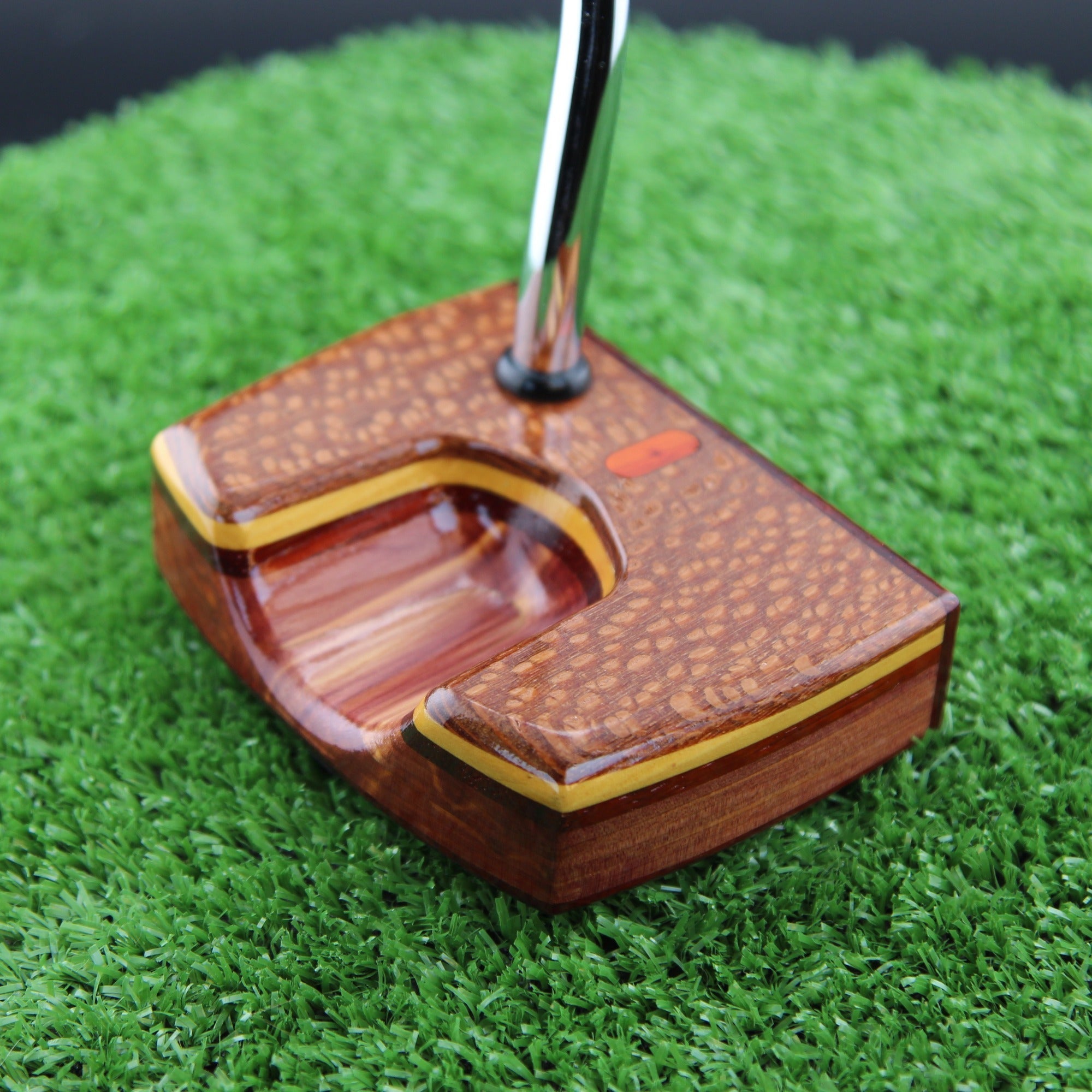
MR1PUTT — Padauk & Wenge FATTY, Zero Torque
$299 — flame-red Padauk against near-black Wenge
CNC-machined to exact tolerances, hand-finished in the shop — and ready for your custom engraving on the top and sole (+$40 at checkout).
Design Yours → Add to CartWhy Grain Exists — and Why It Moves Your Ball
Grass blades don't grow straight up. They lean — toward the setting sun, toward drainage, away from prevailing wind. A ball rolling with the lean glides on the blades' flat sides and rolls out fast. Against the lean, it's climbing into the blade tips and slows hard. Cross-grain, it gets nudged sideways — sometimes more than the slope itself would move it.
Bermuda: Where Grain Is King
Bermudagrass — the standard across the South — has thick, aggressive blades with the strongest grain in golf. On Bermuda, grain can outweigh subtle slope entirely. Read it three ways: the shine test — look toward the hole; if the green appears shiny/silver, you're down-grain (fast); dull and dark means into the grain (slow). The cup check — one edge of the hole often looks ragged or brown; grain grows toward the ragged side. The sunset rule — Bermuda tends to lean toward the setting sun (west).
Bentgrass: Slope First, Grain Second
Bentgrass — the northern standard, common here in Wisconsin — has fine blades and is mown so tight that grain is subtle. On bent, trust your slope read first; grain matters mostly on slow, dying putts near the hole and around drainage. Late in the day, grown-out bent gets slower and a touch grainier.
Poa Annua: The Afternoon Wildcard
Poa — famous on the West Coast — grows fast enough to change during your round. Morning Poa is smooth; by afternoon, seed heads create the bumpy, jittery roll pros complain about. Grain reading helps less here than adjusting expectations: hit late-day Poa putts firmer and accept some wobble on the last foot.
Adjusting Your Stroke — and Your Equipment
Down-grain: treat the putt a foot or two faster than it looks. Into the grain: firmer strike and expect break to lessen — speed neutralizes grain. Cross-grain: aim on the high-grain side, especially on Bermuda.
One equipment note from the bench: grain punishes skid. A ball still sliding when it hits cross-grain gets pushed around far more than one already rolling true. That's a big reason we laser engrave every face to a consistent depth — the texture grips the ball and starts real roll sooner, so grain has less say in your line. It's also why heavier, high-MOI heads like our Woodrich Regal shine on grainy southern greens: the mass powers through into-the-grain putts without a jabby stroke.
Grass and Grain FAQ
How do I tell which way the grain grows?
Look toward the hole: a shiny, silvery sheen means the grain runs with you (fast); a dull, dark look means it runs at you (slow). The ragged edge of the cup also points the direction the grass grows.
Which grass has the strongest grain?
Bermudagrass, by a wide margin — its thick blades can influence a putt more than subtle slope. Bentgrass grain is mild; Poa's issue is bumpiness more than grain.
Does grain matter on fast greens?
Less — the faster the surface and firmer the putt, the less time grain has to act. It matters most as the ball dies near the hole, on any grass.
From the Shop
Pick Your Putter — Every One Can Be Engraved


Add custom engraving to any putter for $40 — just select the option on the product page.
The Bottom Line
Slope tells you where the putt breaks; grain tells you how much and how fast. Learn the shine test, know your grass, and give the ball a true roll early — the green stops surprising you after that.
Make Your Mark on the Green
Every TimberTouch putter is designed in CAD, CNC-machined to exact tolerances, and hand-finished. Pick yours and we'll engrave your story into it.
Shop All Putters →First Look at New One-of-a-Kind Builds
Many of our putters are one of a kind — when they're gone, they're gone. Join the list and see new builds and engraving ideas before anyone else.
Share:
What Length Putter Do I Need? A Putter Maker's Fitting Guide
PGA HOPE Ambassadors and TimberTouch: Putters for Veterans Who Give Back