

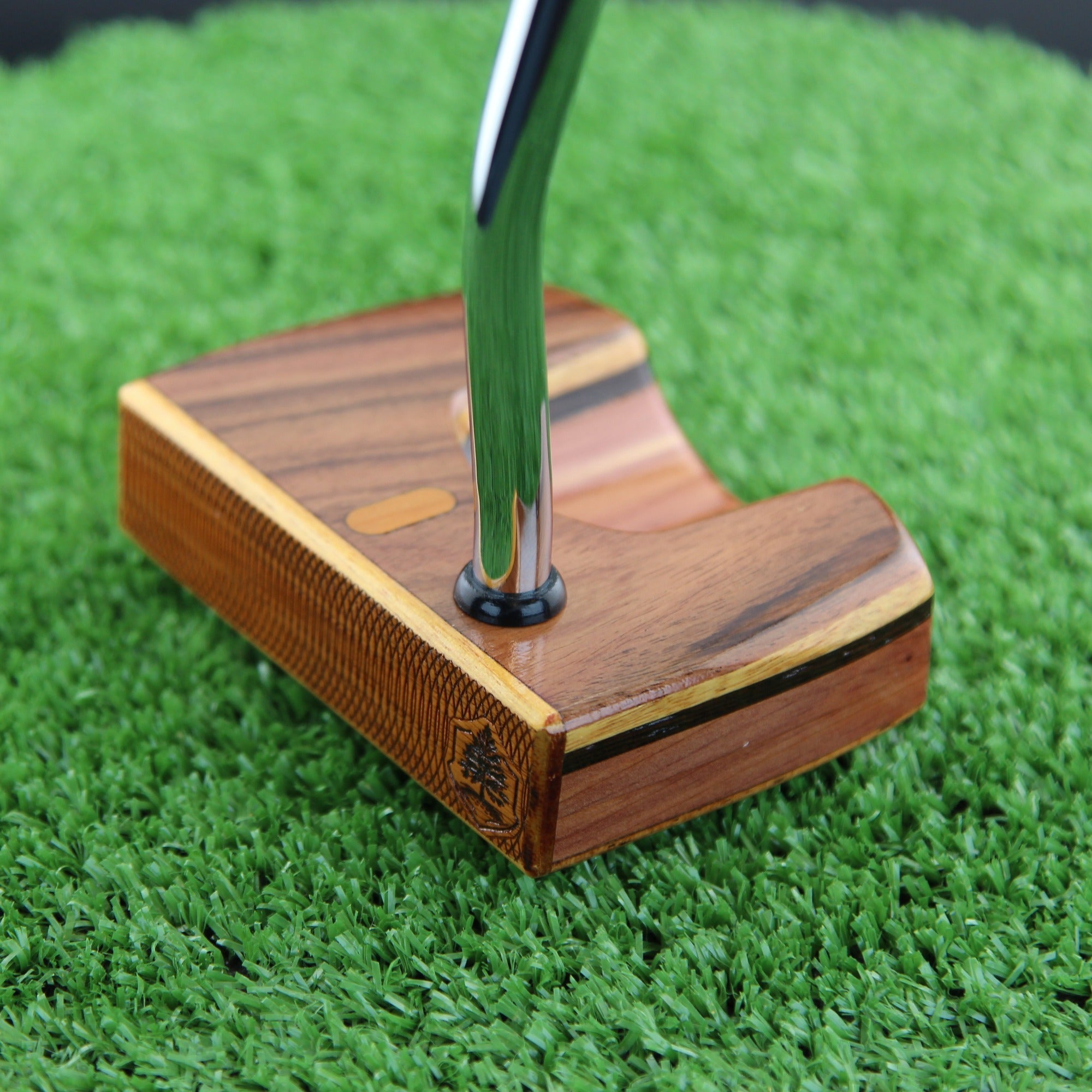
Putter feel is one of the most-used phrases in golf, and here's the maker's secret about it: feel is mostly sound. The click or thump at impact reaches your ears milliseconds before any vibration story finishes arriving through your hands, and your brain fuses the two into one impression it labels “feel.” Researchers have shown this in testing — mute the sound of impact and golfers' descriptions of the same putter change dramatically. I've spent years machining putter heads from exotic hardwoods, a material chosen as much by the ear as by the eye, so let me walk you through the acoustics of a putt and why they matter to your distance control.
What Actually Happens at Impact
A putt is a tiny collision. The ball is on the face for well under a millisecond, the face vibrates, and those vibrations become sound in the air and buzz in your hands. The pitch and duration of that sound depend on the head's material and construction. Stiff, dense, homogeneous materials — milled steel — ring at high frequencies: a bright click. Materials with internal damping — polymers, and above all wood, with its cellular structure and natural oils — absorb those high frequencies and return a lower, shorter note: a thump.
That's the entire reason the putter insert industry exists. Manufacturers mill grooves into steel faces and glue in polymer inserts largely to lower the frequency of impact — to make steel sound less like steel. Wood starts where those modifications are trying to arrive.
Why Your Ears Run Your Distance Control
Good putters calibrate speed by strike feedback. A bright click reads as “fast and hot” to your nervous system; a muted thump reads as controlled — and this isn't just preference. Golfers consistently judge a louder, higher-pitched impact as a harder hit even when ball speed is identical. On quick greens, equipment that sounds soft lets you make a confident stroke instead of a decelerating poke at the ball. That's why so many players switch to insert-face putters for fast conditions. A hardwood face gives you that same acoustic calm with nothing glued on.
Every Wood Has a Voice
Here's where my job gets genuinely fun. Different hardwoods damp differently, so the face wood tunes the note. Dense, oily rosewood — the same family of woods used for guitar backs and marimba bars — returns a rich, solid knock. Wenge, extremely hard and coarse-grained, sounds a touch firmer and more percussive. Softer companions like cedar in the body soak up lingering vibration, shortening the note. When I combine woods in a head, I'm setting MOI and balance first — but I'm also, unavoidably, voicing an instrument. It's no coincidence that the wood species prized by instrument makers overlap so heavily with the ones I build putters from.
Golfers hear it immediately. The most common first-putt reaction I get isn't about looks — it's some version of “oh, that sound.”
Construction Matters as Much as Material
A putter head isn't just a material, it's a structure. Glue lines between laminated woods act as damping layers. A deep, full-bodied head like my FATTY encloses more air and mass behind the face than a thin blade, lowering and shortening the impact note further. This is engineering you can hear: the same design work — CAD modeling, CNC machining to exact tolerances, hand finishing — that sets the head's weighting also sets its acoustics. You can hear the difference across body styles in the FATTY collection, where the full mallet body gives the deepest note of anything I build.
How to Audition a Putter With Your Ears
Next time you test putters, add one step: close your eyes for three strokes. Notice what the impact sounds like — bright or deep, long or short — and notice what your hands believe about the hit. Then putt three balls to a fringe from thirty feet with each candidate. Most golfers find their lag putting is calmest with the putter whose sound they'd describe as quiet and solid. Trust that. Your ears have hit more putts than any launch monitor.
Frequently Asked Questions
Is putter feel really just sound?
Largely, yes. Impact sound and hand vibration arrive almost together and the brain fuses them; testing shows golfers' feel judgments change when the sound is masked. A putter that sounds soft is, to your nervous system, a putter that feels soft.
Why do wood putters sound softer than steel?
Wood's cellular structure and natural oils damp high-frequency vibration, so impact returns a low, short thump instead of steel's bright ring. It's the effect polymer inserts and deep face milling are engineered to imitate.
Does a softer-sounding putter change how far the ball goes?
Not by itself — roll distance comes from your stroke. What changes is your perception of the hit, and calmer perception produces better speed control, especially on fast greens.
Do different woods sound different at impact?
Clearly. Dense rosewood knocks richly, wenge is more percussive, and lighter body woods shorten the note — the same reason instrument makers choose specific species. The wood combination in a putter tunes its voice.
Should I choose a putter by sound?
Include it, deliberately. After confirming fit — length, head style, alignment — audition finalists with your eyes closed and pick the one whose impact sound makes you feel unhurried. That's feel, measured honestly.
The Bottom Line
Feel isn't mystical — it's acoustics arriving through your ears and hands, and material sets the tune. Steel needed a hundred years of inserts and milling to chase the sound a hardwood face makes naturally. If you've never heard a putt off wood, that first quiet, solid knock explains this entire essay in one stroke.
Share:
The Best Golf Movies Ever: A Putter Maker's Watch List
Exotic Wood Putters: What Each Wood Actually Brings to the Roll