

Golf hasn't always been an 18-hole game. In its early days in Scotland, courses simply used whatever land was available — some had five holes, others had a dozen or more. The Old Course at St Andrews, the most famous course in the world, originally played as 22 holes: eleven out along the coast and the same eleven back in.

Signature Design · The Plumbline
Plumbline — Purpleheart & Walnut FATTY
$305 — deep purpleheart against warm walnut
CNC-machined to exact tolerances, hand-finished in the shop — and ready for your custom engraving on the top and sole (+$40 at checkout).
Design Yours → Add to CartThat changed in 1764, when the golfers at St Andrews decided several of the opening holes were too short and combined them, reducing the layout to 18 holes. Because St Andrews carried so much weight in the game, other courses gradually followed its lead. In 1858, the Royal and Ancient Golf Club of St Andrews formalized it, declaring that one round of the links equaled 18 holes — and the standard spread around the world from there.
From the Shop
Pick Your Putter — Every One Can Be Engraved


Add custom engraving to any putter for $40 — just select the option on the product page.
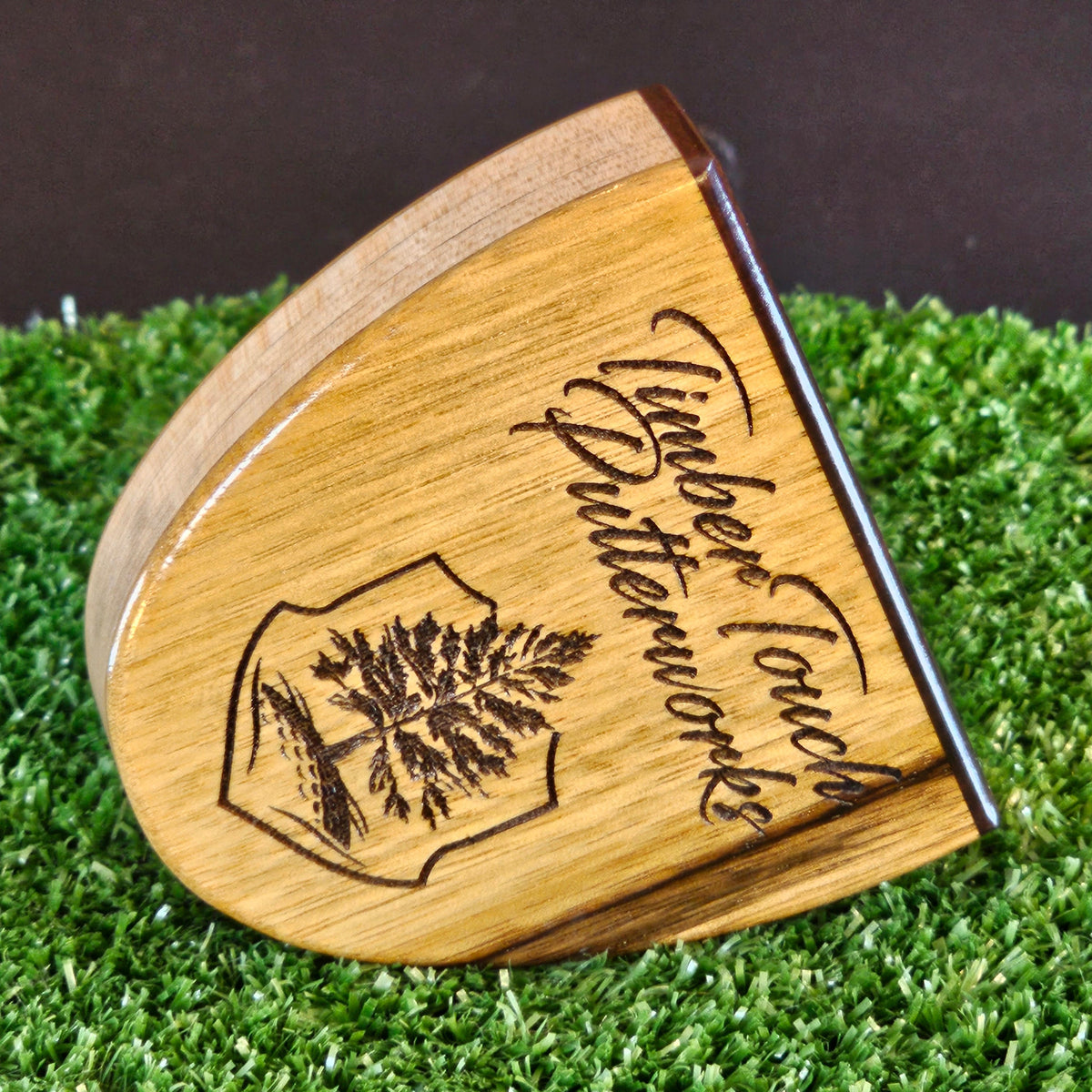
Today, 18 holes is so ingrained in golf that everything from handicaps to course design assumes it. And whether your round is 9, 18, or a long buddy-trip 36, a putter you trust matters on every one of those greens. Timber Touch Putterworks' handcrafted wood putters deliver a consistent, true roll from the first hole to the last.
Make Your Mark on the Green
Every TimberTouch putter is designed in CAD, CNC-machined to exact tolerances, and hand-finished. Pick yours and we'll engrave your story into it.
Shop All Putters →First Look at New One-of-a-Kind Builds
Many of our putters are one of a kind — when they're gone, they're gone. Join the list and see new builds and engraving ideas before anyone else.
Share:
Putting Green Facts: Green Size, Hole Diameter & Speed
Golf Course Trends in America: 50 Years of Growth and Change