

If you've been around golf long enough, someone has probably looked you dead in the eyes and said, "Did you see the back nine at Augusta in '86?" And if you know, you know. If you don't — buckle up, because this might be the greatest Sunday afternoon in the history of the sport.

Signature Design · The Highmark
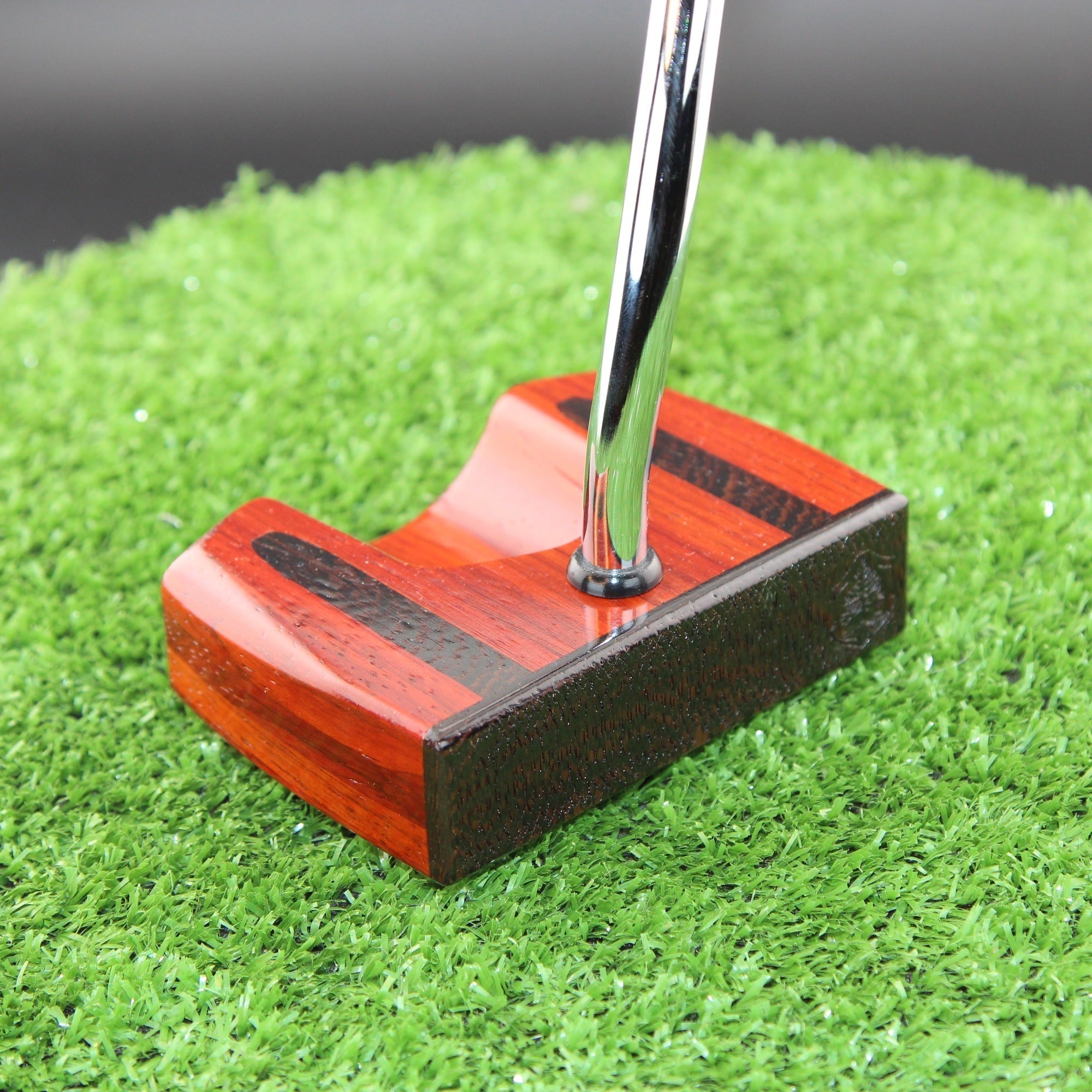
Highmark Woodrich Regal Putter
$299 — canarywood and walnut with a padauk striking face
CNC-machined to exact tolerances, hand-finished in the shop — and ready for your custom engraving on the top and sole (+$40 at checkout).
Design Yours → Add to CartIt was April 13, 1986. Jack Nicklaus was 46 years old. He hadn't won a major in six years. The golf media — never ones to let sentiment get in the way of a juicy narrative — had basically written him off. One columnist famously called him "done, washed up, through." The Golden Bear's pelt, apparently, had lost its shine.
The field that year was loaded. Greg Norman was lurking near the top of the leaderboard. Seve Ballesteros, arguably the most charismatic ball-striker in the world at the time, was right there. Tom Kite. Nick Price. These weren't scrubs. These were the best players on the planet, all chasing a green jacket on the most intimidating back nine in major championship golf.
Jack started the final round four shots off the lead. Four shots. At Augusta. On Sunday. With a bunch of hungry, talented players standing between him and glory. By most reasonable calculations, his chances were slim.
Then something magical happened.
He made birdie on 9. Fine, stay with us, Jack. Then birdie on 10. Now people started paying a little more attention. Birdie on 11 — and now the place was buzzing. He made par at the treacherous 12th (Amen Corner has eaten more scorecards than any hole in history), then eagle on the par-5 13th. Eagle. The roar from Augusta National was so loud that people in the gallery at other holes could feel it in their chests.
He wasn't done.
Birdie at 15. Birdie at 16. Another birdie at 17. By the time Jack Nicklaus walked onto the 18th green, he had played the back nine in 30 strokes — six under par — in a major championship final round at age 46. The leaderboard had gone haywire. Ballesteros made a bogey on 15. Norman needed eagle on 18 to tie and could only make birdie. Jack Nicklaus slipped on his sixth green jacket.
Six. Majors. At. Forty-Six.
What's wild is that people who were at Augusta that day still get a little misty talking about it. There's video of his son Jackie, who was caddying for him, leaping with pure joy as Jack's birdie putt on 17 dropped. The look on Jack's face — that mix of disbelief and "I knew it all along" — is one of the most iconic images in sports.
Now, here's the part where I'll gently steer us toward putting, because honestly, this is a putting story as much as anything. Jack Nicklaus was a phenomenal iron player, but what separated him in his prime — and what he rediscovered on that magical Sunday — was his ability to read greens and make putts when the moment demanded it. The back nine at Augusta is not a place for the faint-hearted. Those greens are slick, undulating, and utterly unforgiving. Every putt is a test of nerve, touch, and feel.
Feel. That's the word.
Great putting has always been about feel — the way the grip sits in your hands, the way the face meets the ball, the soft energy that transfers from clubhead through the turf and into the cup. Metal putters can do the job, sure. But there's something about a putter with a wooden face that gives you feedback like nothing else. A well-struck putt just feels different. You know it the moment impact happens.
From the Shop
Pick Your Putter — Every One Can Be Engraved


Add custom engraving to any putter for $40 — just select the option on the product page.
At TimberTouch Putterworks, that's the whole idea. Every putter is handcrafted from exotic woods — real wood, with real feel, built one at a time. Jack Nicklaus had the putter that suited his stroke. Maybe it's time you found yours.
Check out the full collection at https://www.timbertouchputterworks.com. There's a putter in there that was made for your game — and maybe, just maybe, for your own golden Sunday.
Make Your Mark on the Green
Every TimberTouch putter is designed in CAD, CNC-machined to exact tolerances, and hand-finished. Pick yours and we'll engrave your story into it.
Shop All Putters →First Look at New One-of-a-Kind Builds
Many of our putters are one of a kind — when they're gone, they're gone. Join the list and see new builds and engraving ideas before anyone else.
Share:
Yellowheart exotic wood Woodwin putter
Mallet vs. Blade Putter: Which Suits Your Stroke?